The below blog post has been written by the research team, and details of how to participate in the research can be found at the bottom of this post. Verity have sighted the ethics approval granted for the recruitment of this study. Please note that the condition previously known as PCOS is now referred to as PMOS; some researchers and clinicians may still use the term PCOS during this transition period.
Introduction
Polycystic ovary syndrome (PCOS) is a common hormonal condition in women. Existing psychology research has explored women’s illness perceptions and their reliance on online information, particularly because the information available can be inconsistent. Medicine research has recognised challenges women face in understanding their condition and navigating healthcare systems. However, psychology focused research, especially within the UK, remains limited. There is still much to learn about how women seek support and decide when to access care.
About the Study
- This study involves discussing personal experiences of PCOS, which include sensitive topics such as symptoms, personal concerns, and negative encounters with the healthcare system.
- Involves collecting health information (clinical diagnosis of PCOS), so confidentiality and anonymity will be strictly maintained using pseudonyms.
- Approval given by University of Reading, School of Psychology and Clinical Language Sciences Research Ethics Committee.
What’s Involved?
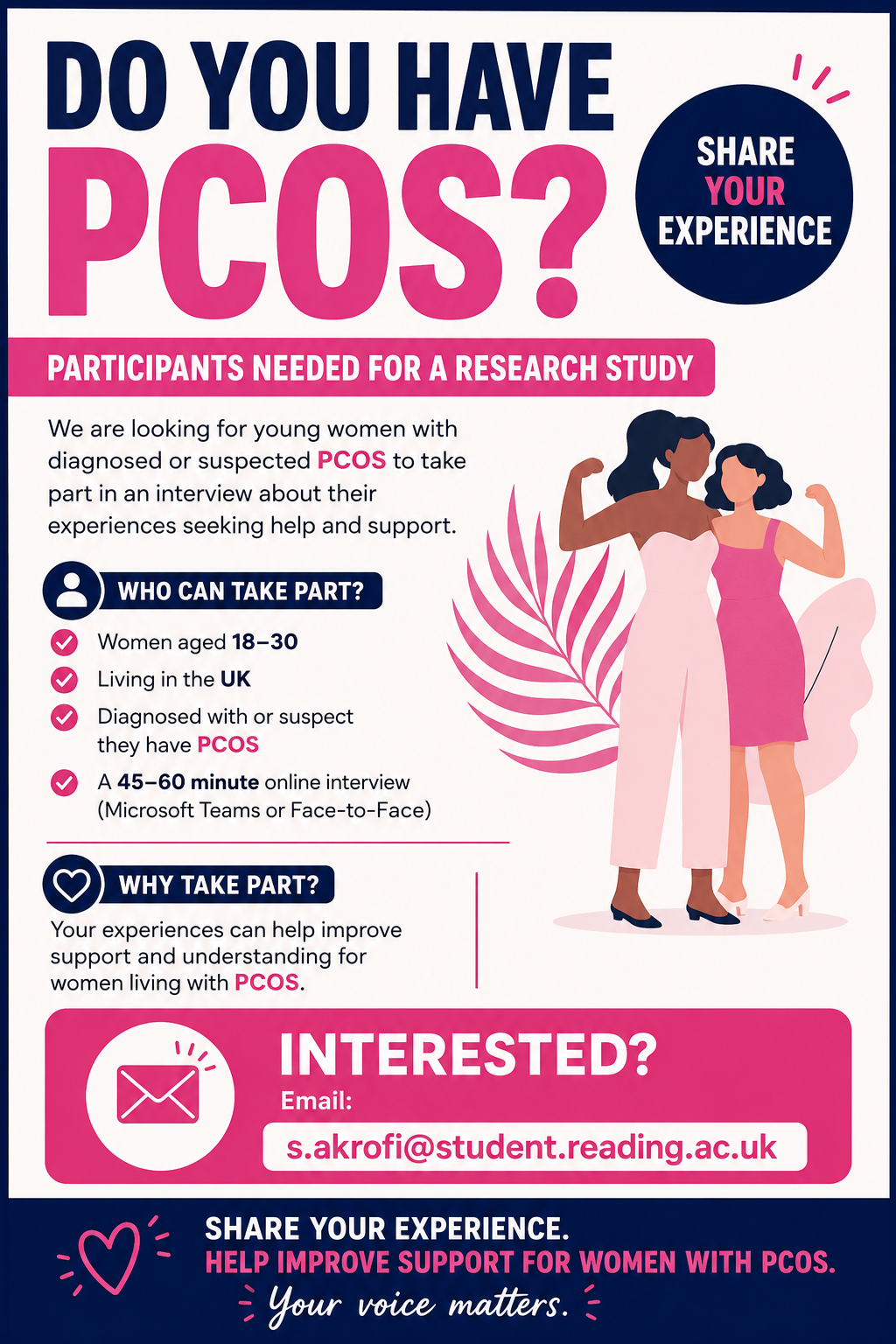
Participants will take part in an online semi structured interview, lasting approximately 45–60 minutes. Before the interview begins, they will receive the participant information sheet and provide informed consent.
Who Can Take Part?
Young women aged 18–30 living in the United Kingdom able to give informed consent
Either:
have a clinical diagnosis of PCOS, or
suspect they may have PCOS based on symptoms
Why Take Part?
There is still much to learn about how women seek support and decide when to access care. Report by the UK Parliamentary group suggests women living with PCOS face prolonged delays in diagnosis and limited access to treatment. Clear gaps remain in understanding help-seeking behaviours, particularly among younger women.
How to Get Involved (Call to Action)
Please see flyer here:
About the Researcher(s)
My name is Sharon I am the MSc Student researcher for this project passionate about PCOS and all things health psychology my project supervisor who is also known as the chief investigator is Dr. Dan Jones.
Closing & Contact
If you have any questions or concerns about the research, please feel free to Sharon Akrofi (Researcher) Email: s.akrofi@student.reading.ac.uk or
Dan Jones (Investigator)
Email: dan.jones@reading.ac.uk
Thank you for your help.


